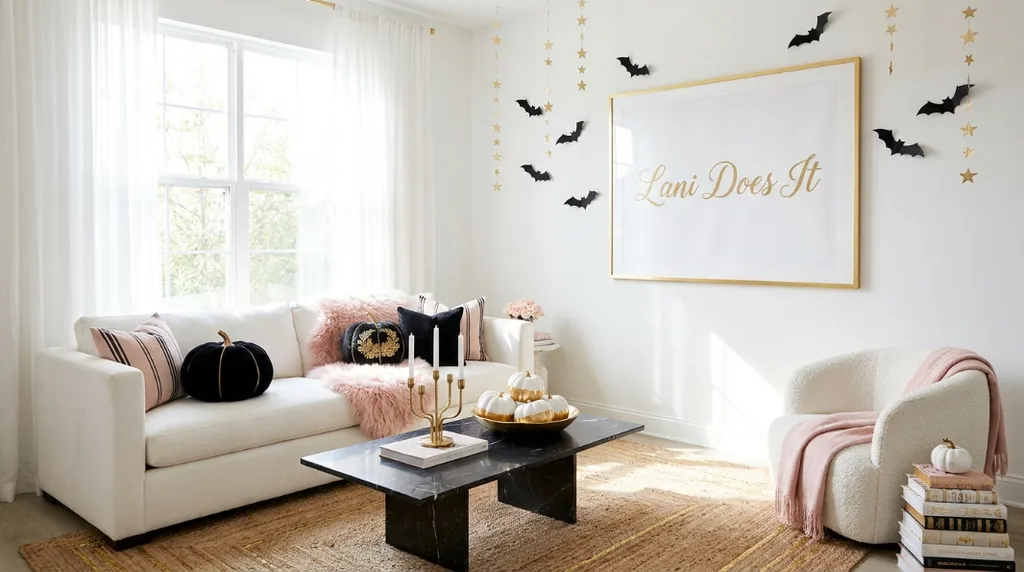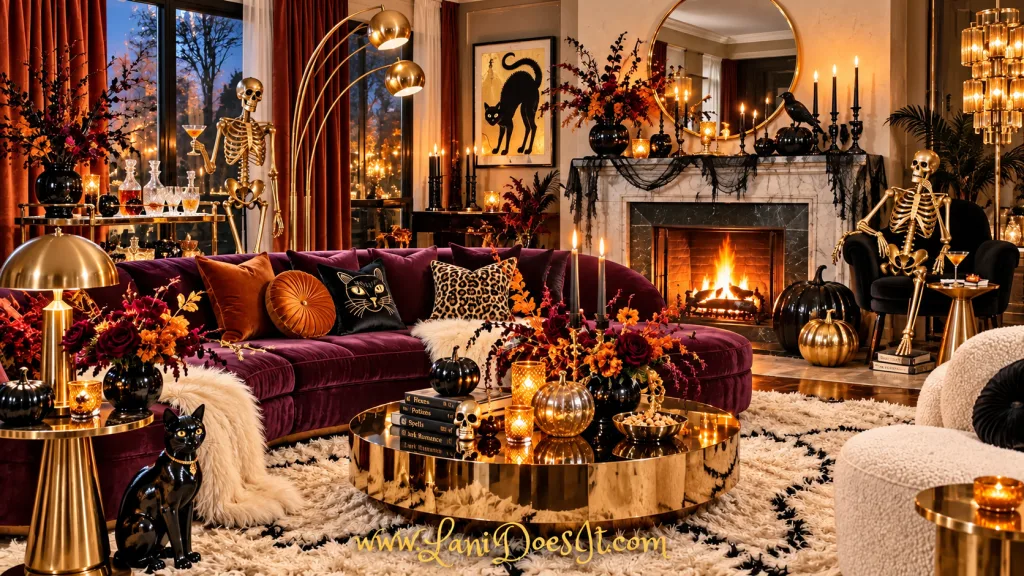
Hey y’all! I’ll be honest: I’m not usually the one posting about the history behind decor. I’m normally too busy moving pumpkins around, fixing crooked witch hats, and figuring out where one more skeleton can sit without startling everybody who walks into the room.
Still, after decorating for Halloween year after year, one question kept popping into my head: “What changed?”
That little bit of curiosity led me to Halloween Decor Then and Now: Trends Shaping the Future, because the jump from carved vegetables to twelve-foot skeletons deserves a closer look.
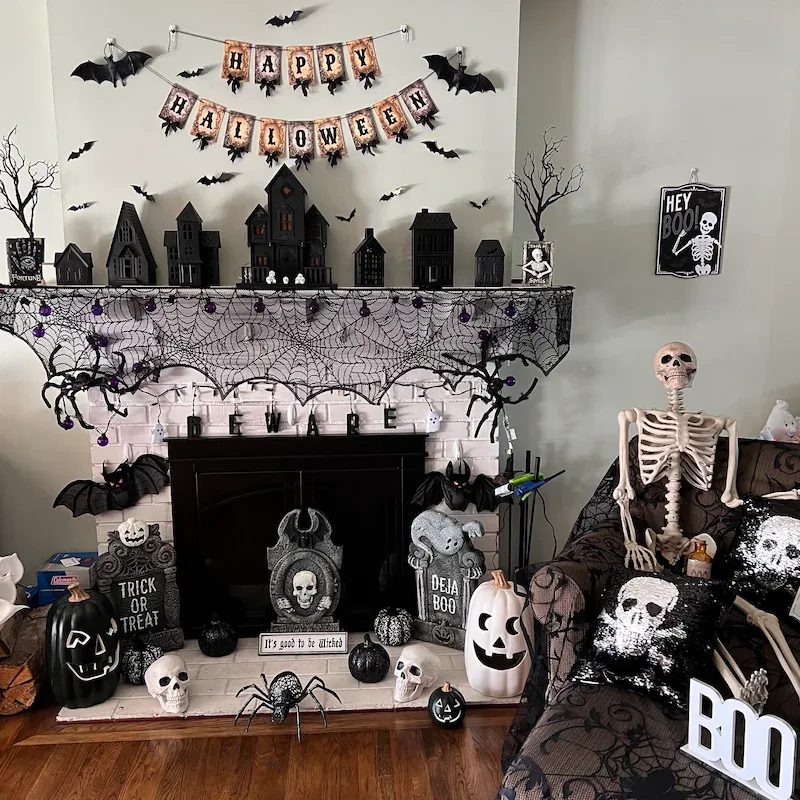
The history of Halloween decorations is really a story about people getting creative with whatever they had nearby. Families once relied on turnips, pumpkins, candles, fabric, and handmade paper pieces. Then manufacturers introduced printed party decorations, retailers brought us plastic graveyards and licensed characters, and technology added inflatables, animatronics, projections, and smart lights.
That is how Halloween decor has changed, although the familiar pumpkins, ghosts, witches, and black cats never truly went anywhere. They simply got bigger budgets and better lighting.
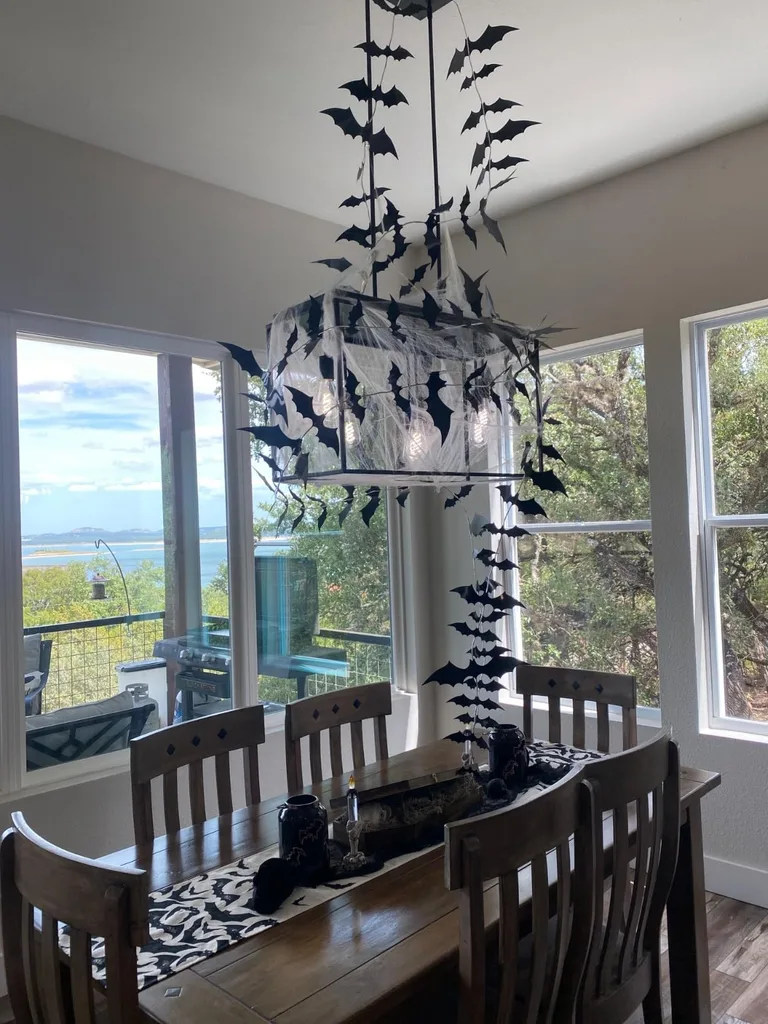
We’re taking a fun stroll through the evolution of Halloween decor, including old folk customs, American house parties, neighborhood porches, and those viral yard decorations that practically become local celebrities. Halloween decor through the decades has been handmade, mass-produced, nostalgic, high-tech, and occasionally too large to fit through the garage door. Modern Halloween decor may look very different from those early glowing lanterns, but the reason we decorate is still pretty familiar: October arrives, and suddenly the house needs a little mischief.
How Has Halloween Decor Changed?
The short answer? Halloween decor evolved from handmade folk traditions into a mix of nostalgic design, mass-produced decorations, oversized outdoor displays, and technology-driven effects.
Carved vegetables became jack-o’-lanterns. Handmade paper decorations became commercially printed party goods. Porch pumpkins grew into complete front-yard graveyards. Candles gave way to bulbs and LEDs. And today, homeowners can control lights, projections, sound, and animated props without leaving the couch.
Yet the symbols themselves have remained surprisingly familiar.
So let’s take a stroll through the evolution of Halloween decor, from old folk customs and American house parties to neighborhood porches and those viral yard decorations that practically become local celebrities.
Halloween decor through the decades has been handmade, mass-produced, nostalgic, high-tech, and occasionally too large to fit through the garage door.
Modern Halloween decor may look very different from those early glowing lanterns, but the reason we decorate still feels pretty familiar: October arrives, and suddenly the house needs a little mischief.
The Folk Traditions Behind Early Halloween Decor
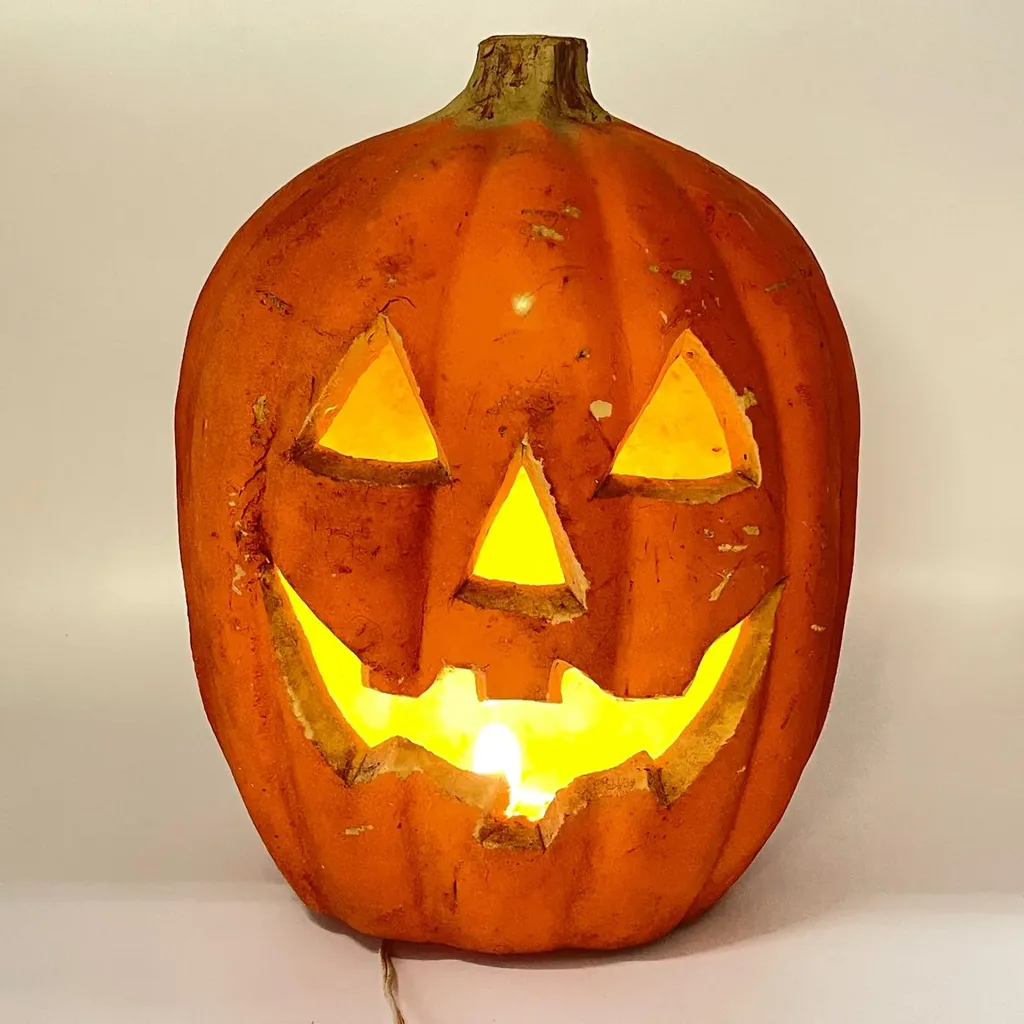
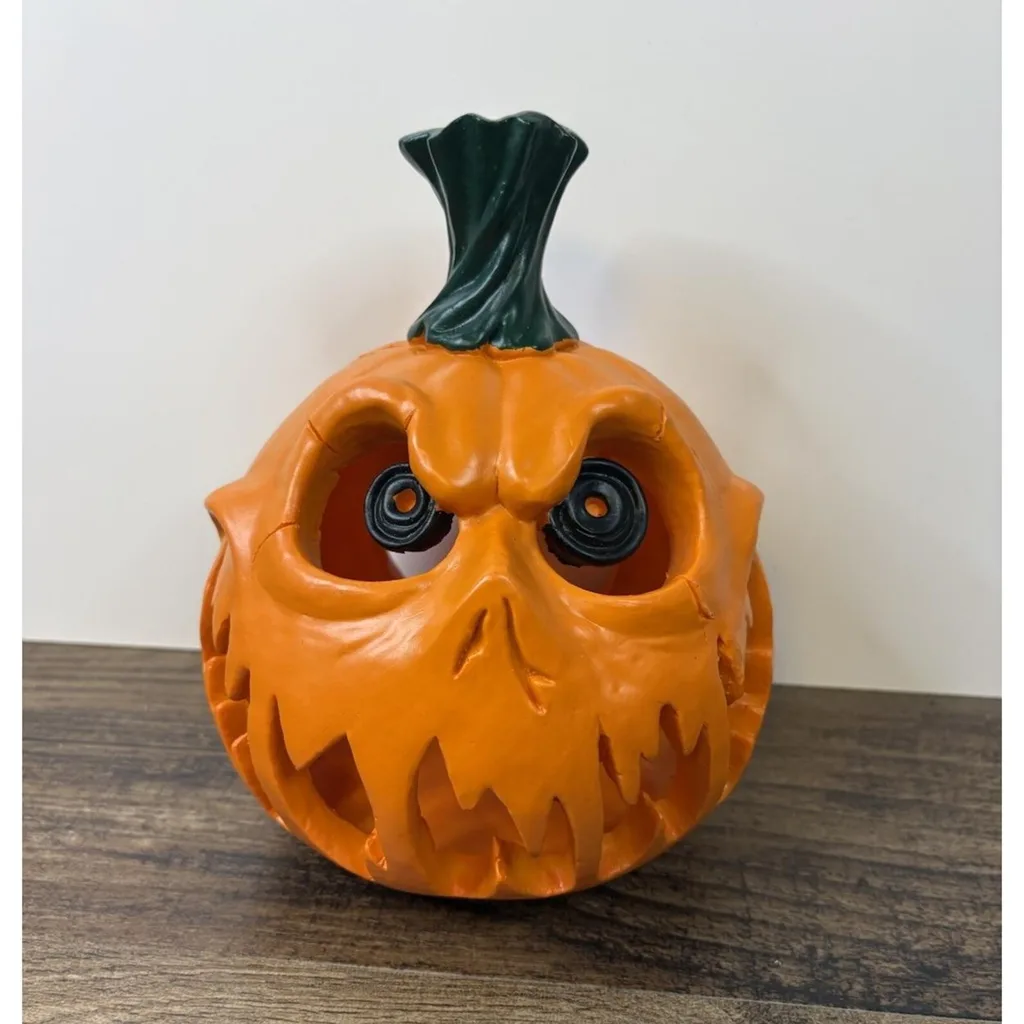
Long before the seasonal aisle opened in July, Halloween grew from a mix of older Celtic customs and Christian observances tied to All Hallows, All Saints, and All Souls. In Ireland and other parts of the British Isles, people carved faces into turnips and other vegetables, slipped a light inside, and placed the lantern near a window or doorway.
Those faces were connected to spirits, folklore, wandering souls, and protection. They were also proof that a determined person can make almost any root vegetable look judgmental.
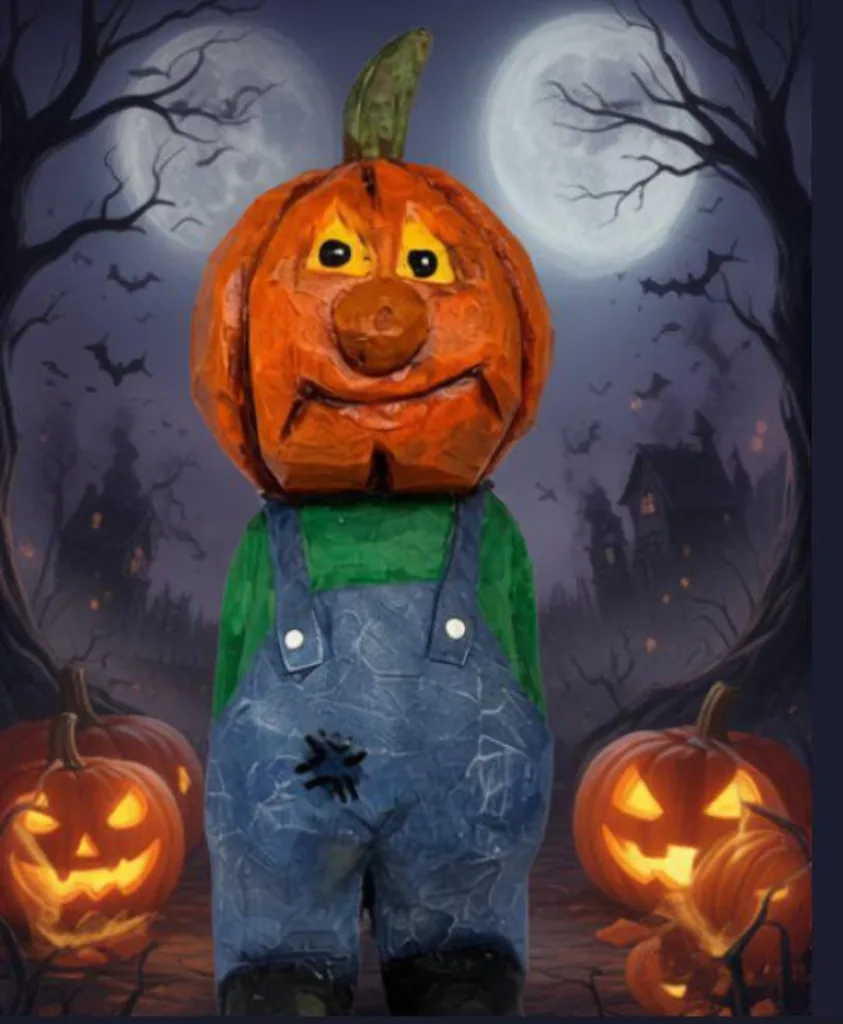
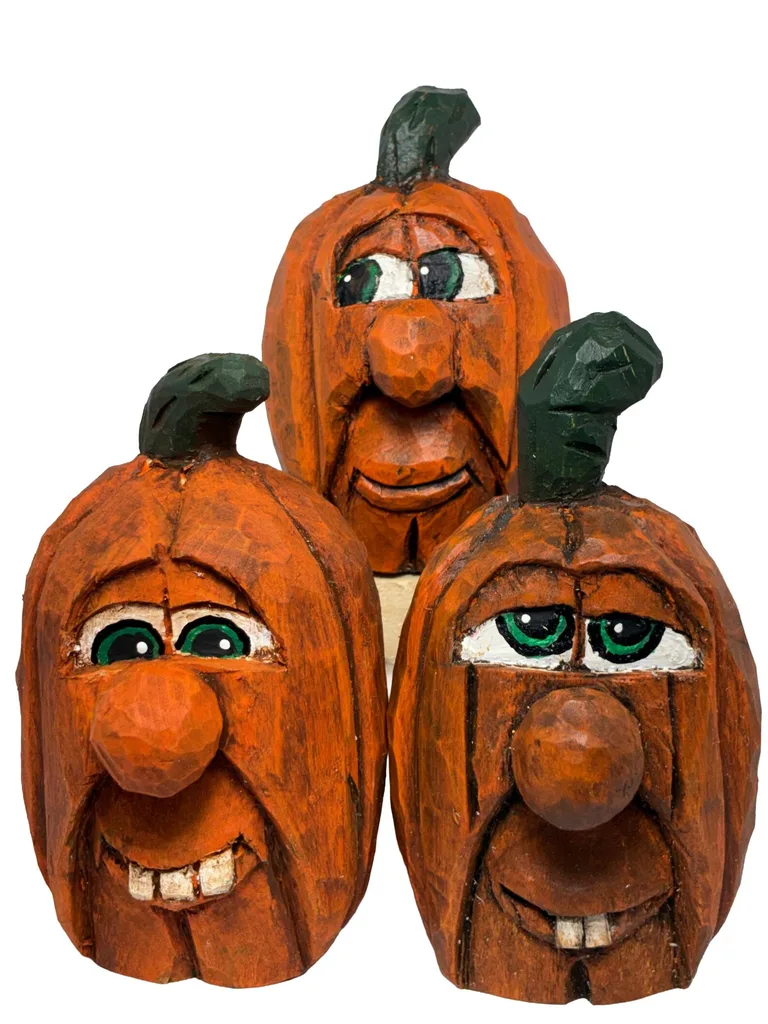
Irish immigrants brought vegetable-carving customs and stories to North America during the nineteenth century. Then they met the pumpkin. It was bigger, softer, easier to hollow, and far less likely to fight back during carving, so it became the familiar jack-o’-lantern choice. That swap is a charming moment in the history of Halloween decorations. The custom stayed recognizable, but North American produce gave it a rounder face and a lot more room for crooked teeth.
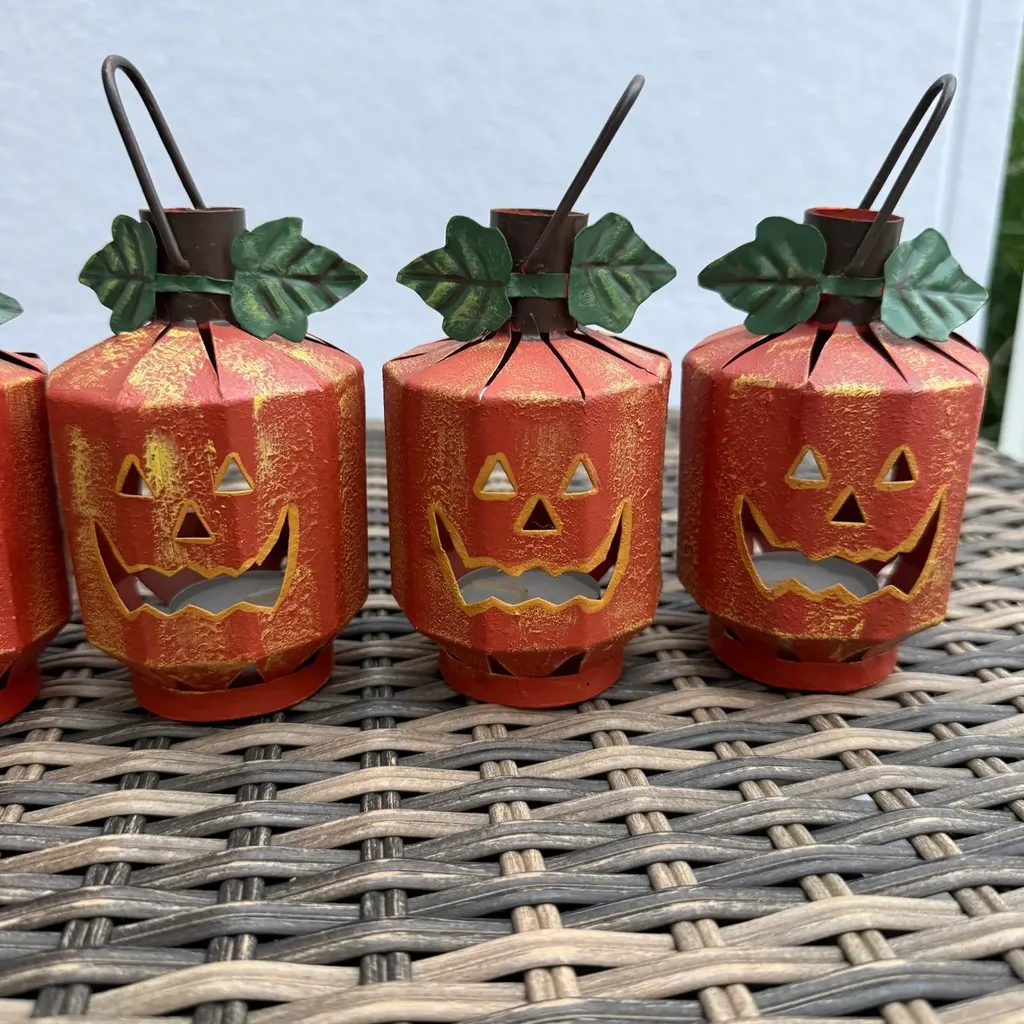
- Carved vegetables did the job of today’s molded lanterns. Turnips, beets, potatoes, and later pumpkins supplied the face and the attitude.
- Candles and firelight created a flickering glow that electric bulbs and LED effects still work hard to imitate.
- Apples, nuts, corn, gourds, and greenery decorated the room, fed the guests, or became part of a party game. Nothing sat around without a side hustle.
- Fabric, paper, string, and household scraps became masks, costumes, hanging figures, table coverings, and homemade scenery.
- Ghostly faces and protective symbols connected the decorations to ideas about spirits, luck, danger, and keeping troublesome visitors outside.
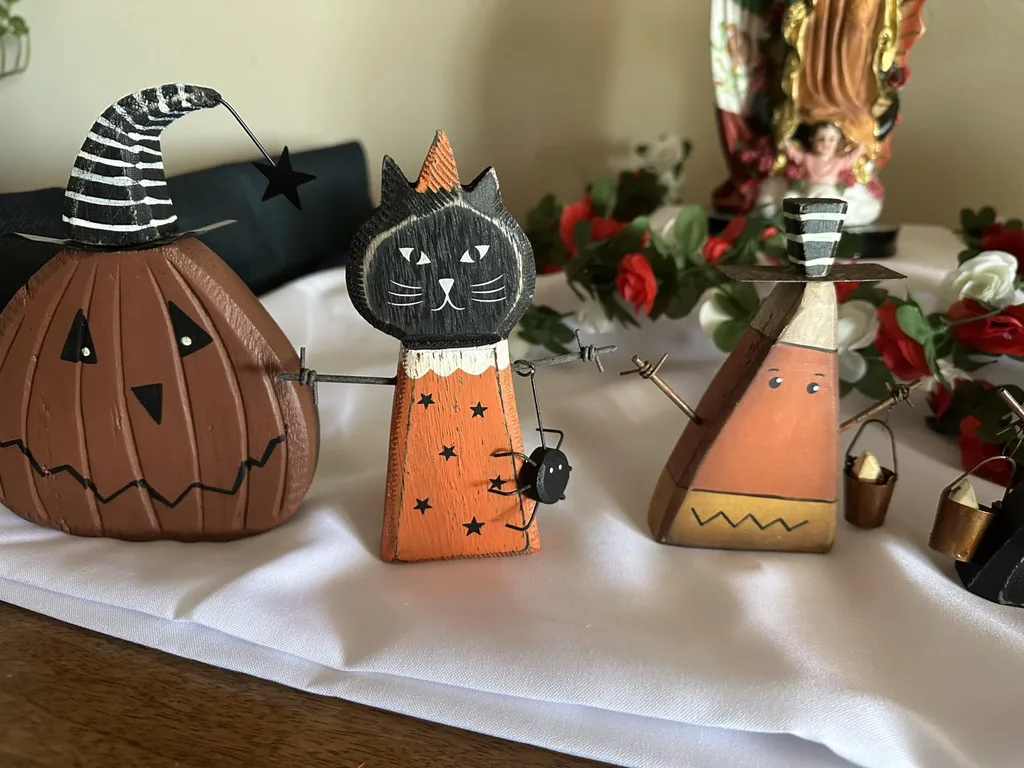
Early decor came from the garden, sewing basket, pantry, and whatever was already in the house. It was temporary and a little uneven, which gave every display its own personality.
That same spirit shows up in Halloween decorating ideas now. A hand-cut cloth ghost or lopsided jack-o’-lantern can be far more memorable than a plastic sign that arrived looking exactly like ten thousand other plastic signs.
How Halloween Decor Entered Homes
By the late 1800s and early 1900s, Americans were throwing Halloween parties at home, and these were proper events.
Guests wore masks, danced, bobbed for apples, played fortune-telling games, and ate themed food in rooms dressed with candles, fabric, paper, and harvest produce. Many games focused on romance and predicting a future partner.
Apparently, finding out who you might marry was considered party entertainment. Nobody had to share a dating profile or pretend to enjoy hiking.
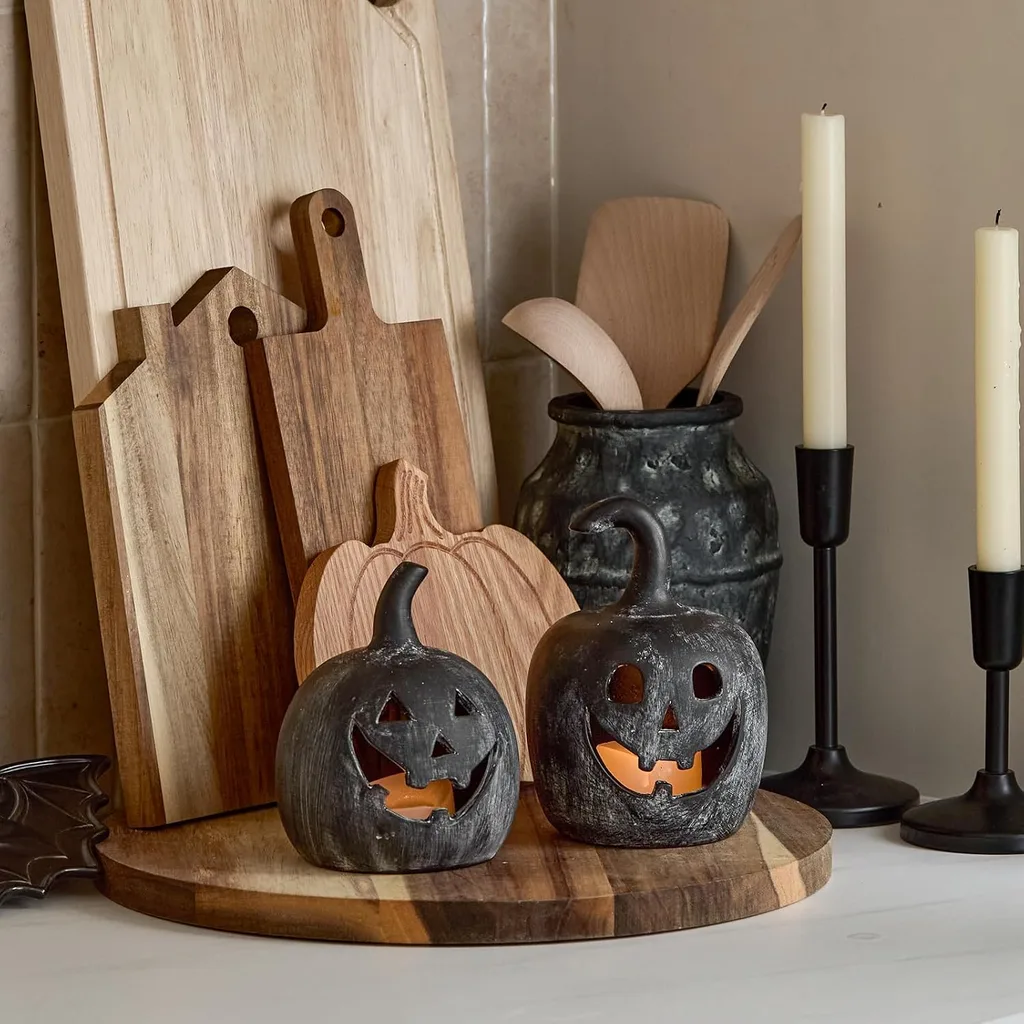
As Halloween entertaining became more popular, manufacturers spotted an opportunity.
Companies including Dennison and Beistle became known for paper Halloween goods featuring witches, pumpkins, cats, ghosts, moons, and other now-familiar characters. Printed decorations meant hosts no longer had to make every detail themselves.
Vintage Halloween decorations helped establish a visual vocabulary that still feels familiar today.
Black cats arched their backs. Pumpkins grinned. Witches flew across moons. Ghosts floated around party rooms.
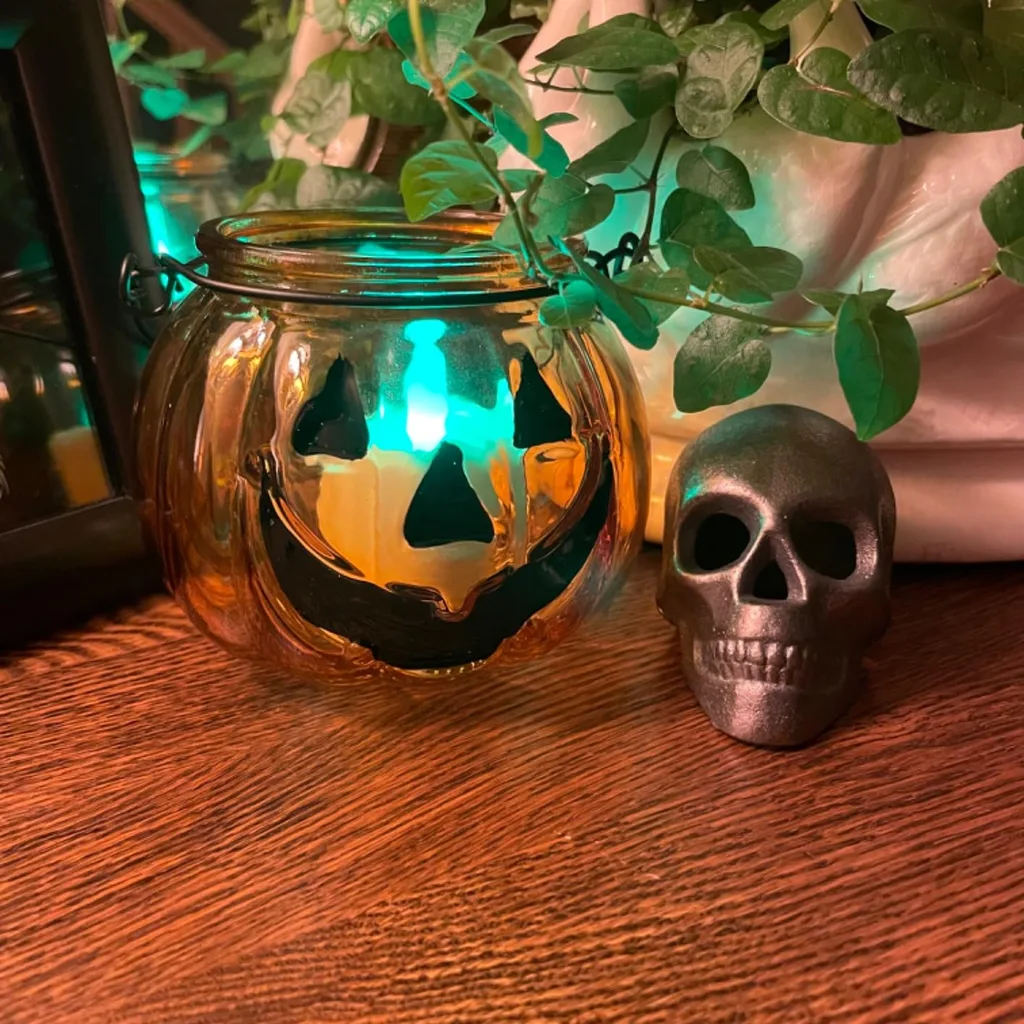
Orange and black also became an enduring Halloween color combination. Orange naturally connected with pumpkins, autumn, fire, and harvest imagery. Black handled bats, cats, witches, nighttime, and basically every spooky character who already understood her brand colors.
This stage in the evolution of Halloween decor made decorating easier and more consistent without completely eliminating the handmade mood.
It simply meant hosts could spend less time cutting crepe paper and more time watching somebody lose an apple-bobbing contest with dignity.
From Family Parties to Front-Yard Displays
Halloween became increasingly focused on children, trick-or-treating, and neighborhood participation during the 1940s and 1950s. Communities had already worked to steer destructive pranks toward supervised fun, and the postwar baby boom filled growing suburbs with children and plenty of doors to knock on.
American magazines began describing “trick or treat” in the late 1930s, while radio, film, and television helped spread the custom. Halloween decor through the decades started moving out of the parlor and onto porches, front doors, school walls, and community-center stages.
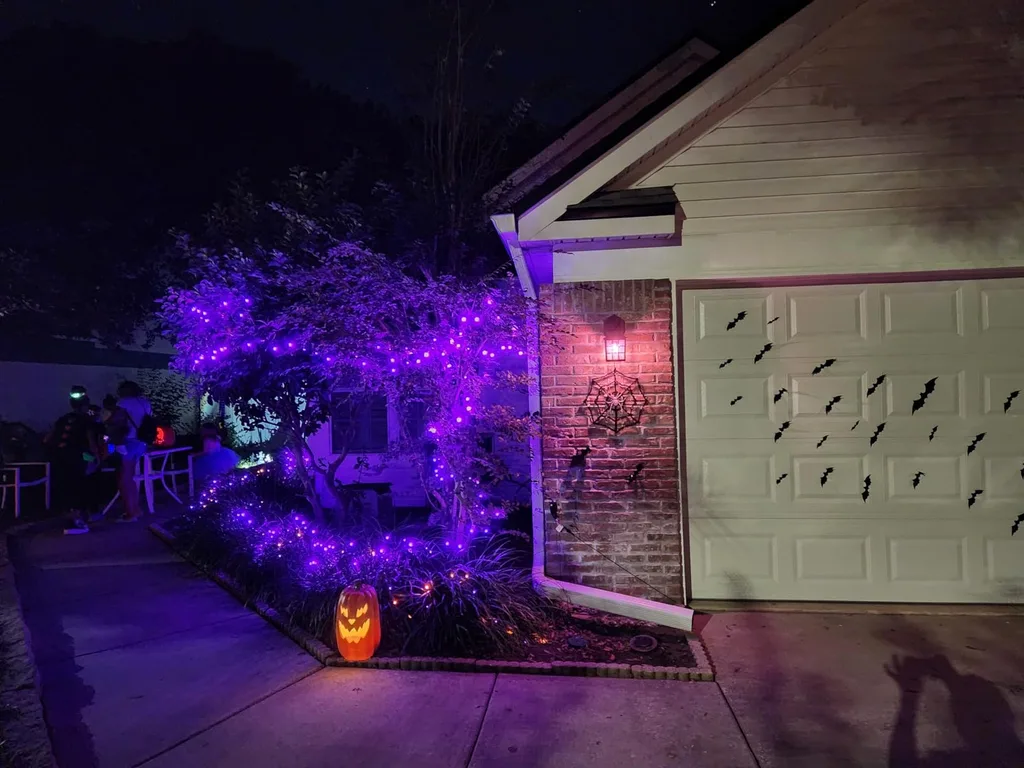
The yard kept getting busier. Plastic tombstones, molded skeletons, string lights, licensed characters, and ready-made graveyard pieces joined the family jack-o’-lantern. Looking at how Halloween decor has changed by the 1980s, 1990s, and early 2000s, the front lawn had become a perfectly acceptable place to stage a small haunting. Modern Halloween decor was no longer one shelf of paper goods. It had indoor, outdoor, cute, creepy, movie-themed, and “please do not surprise Grandma with that” departments.
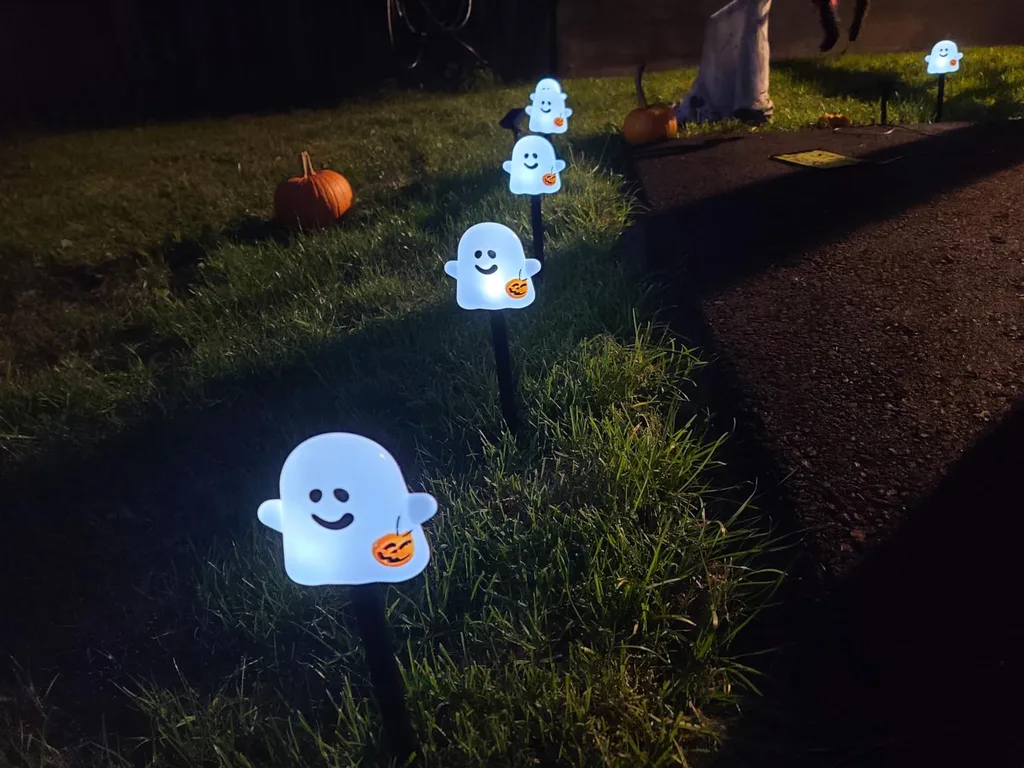
Gemmy made big outdoor effects easier for homeowners to manage. The company introduced its Air blown Inflatable brand in 2001, allowing a large character to rise from a surprisingly compact bundle, then launched the Lightshows brand in 2008 with lighting, yard decor, and projections. Those two dates matter in the story of outdoor Halloween decorations. Suddenly, a yard could gain a giant ghost and a moving light show without anybody studying stagecraft or building a haunted mansion during their lunch break.
How Halloween Decor Became Bigger and More Viral
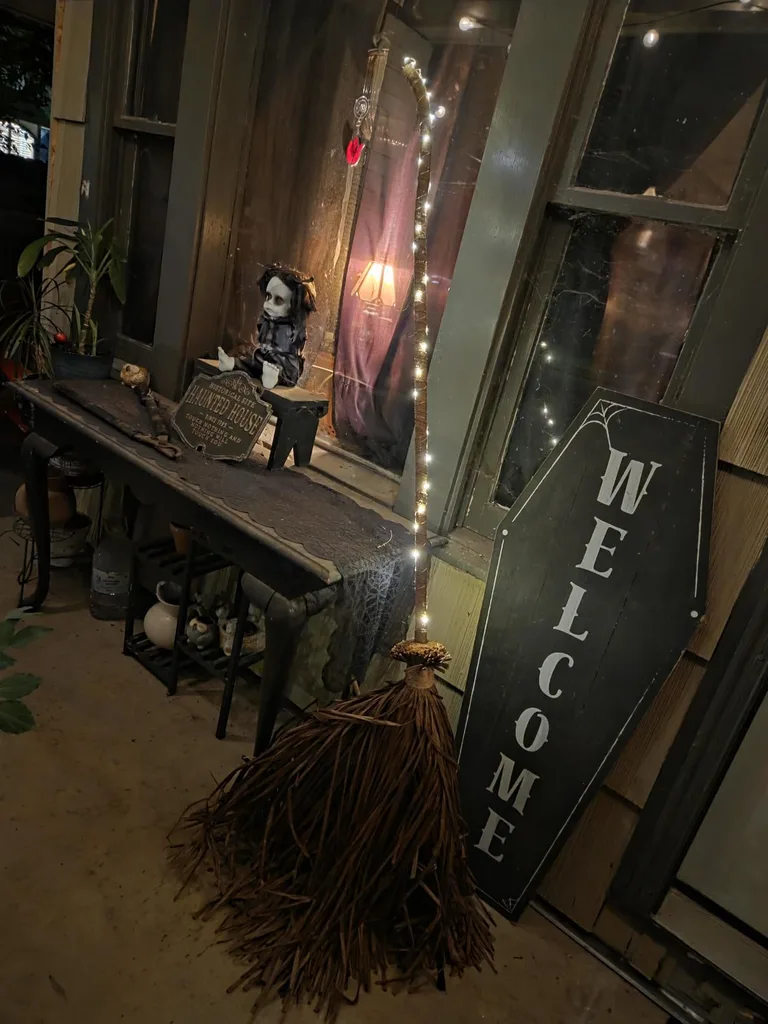
Halloween retail hit the gas during the 2010s and 2020s. Stores rolled out coordinated collections, animatronics learned to move and talk, and porch displays began looking like opening night. Oversized props created instant drama, while projections covered walls without occupying twelve storage bins afterward. Halloween decorating trends also became camera-conscious. The porch still needed to charm the trick-or-treaters, but now it had to look good in a home tour, a reel, and the group chat.
Then came Skelly. Home Depot introduced its twelve-foot skeleton in 2020, and the towering fellow promptly sold out, took over social media, and became the tall, bony mayor of Halloween. Its success helped oversized yard props feel more mainstream. Before Skelly, a skeleton looking into an upstairs window sounded like a neighborhood problem. After Skelly, people were naming him, dressing him for other holidays, and checking the roofline to see what else might fit.
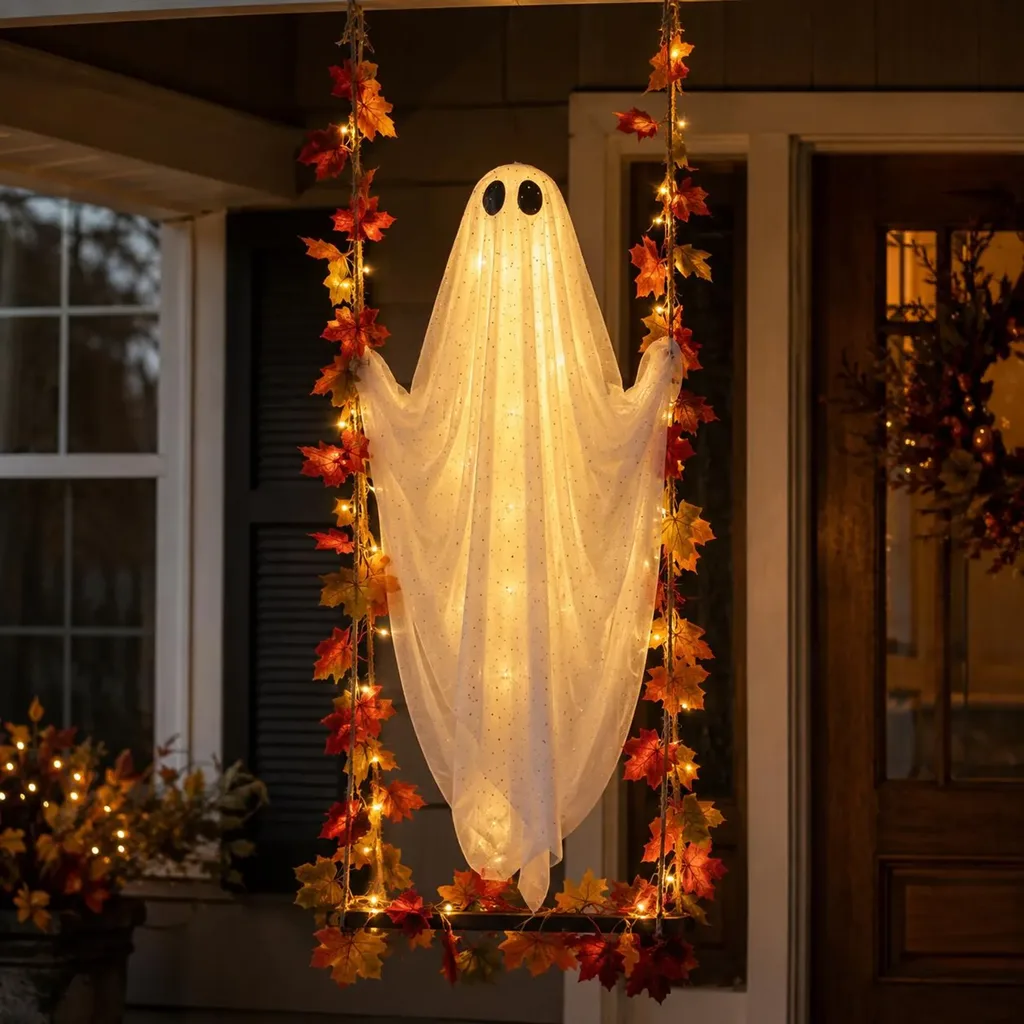
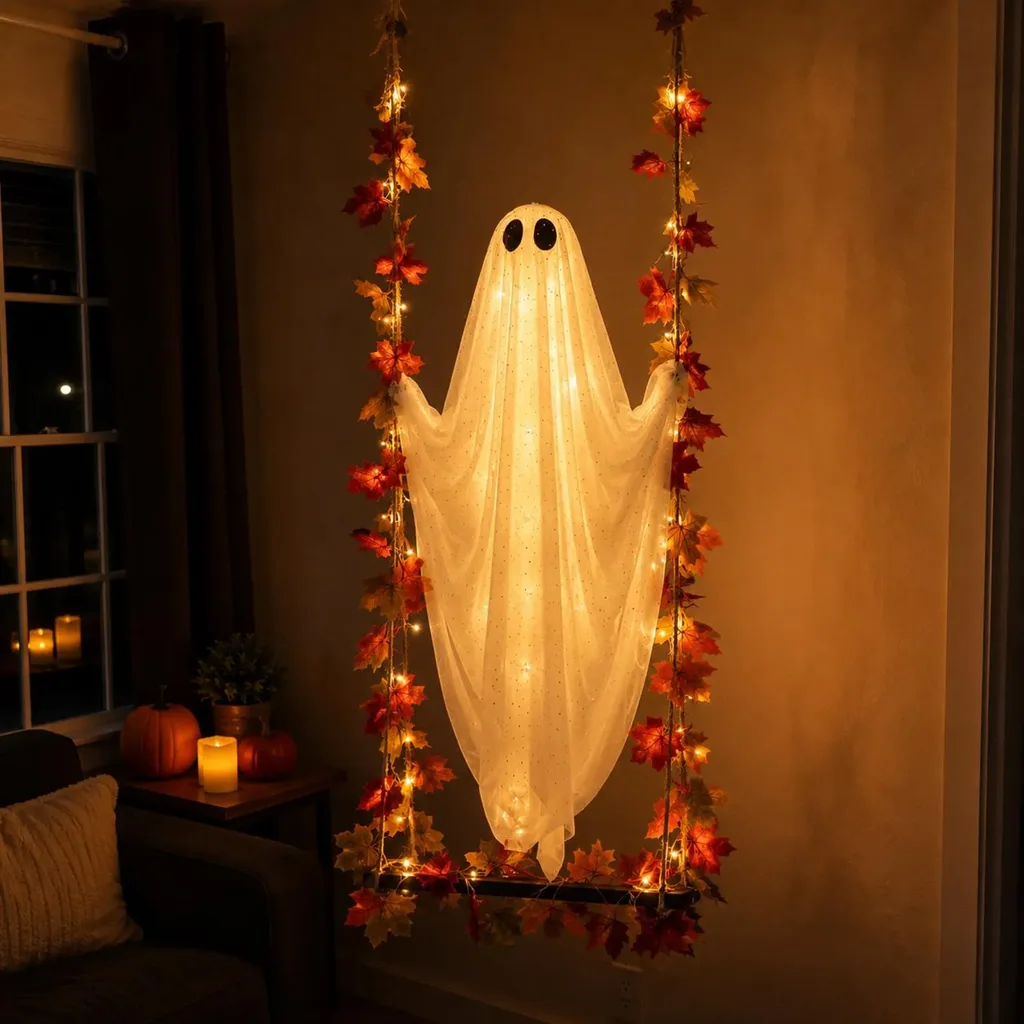
Social media rewarded coordinated home tours, photo-ready porches, viral products, and neighborhood decorating competitions.
Some families built complete scenes with music, movement, and lighting; others let one dramatic piece handle the introductions.
Halloween decor through the decades had always followed popular media, but a modern display could now reach thousands of strangers before the first child rang the bell.
Modern Halloween decor became a little more theatrical, and retailers discovered that a strong silhouette could do serious work on a tiny phone screen.
Why Vintage Halloween Decor Keeps Coming Back
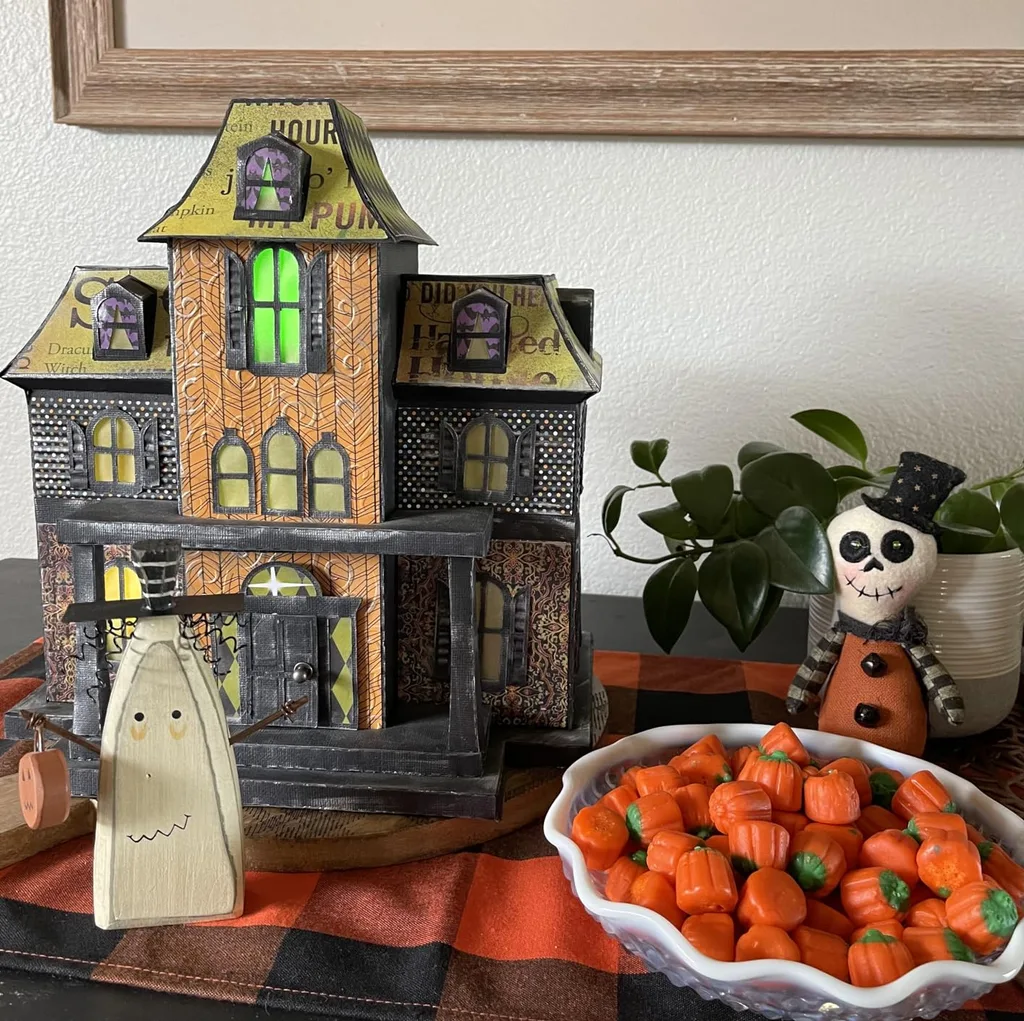
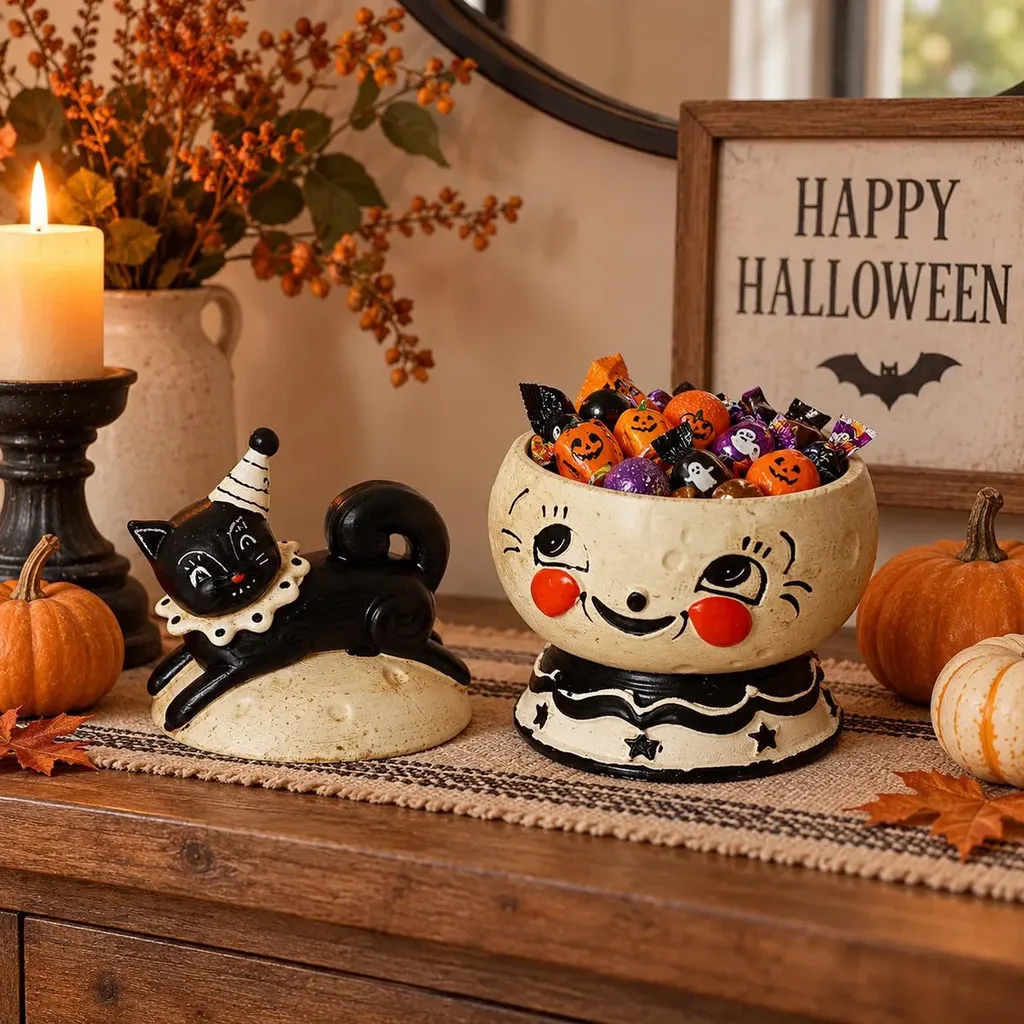
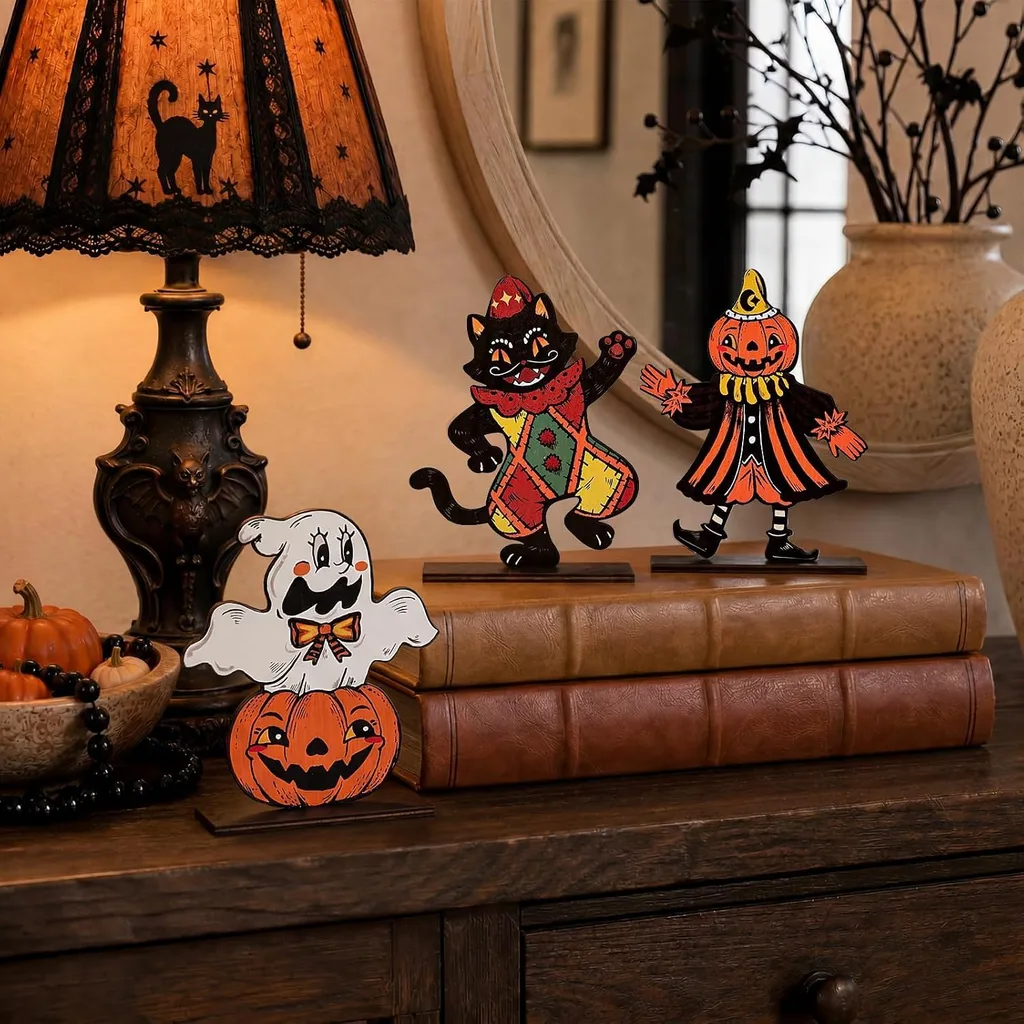
Current designers keep borrowing from early twentieth-century Halloween art because those old characters still know how to work a room. Retro black cats arch their backs, pumpkins grin like they know your business, crescent moons have faces, and witches sail past carnival lettering.
Vintage Halloween decorations now appear on pillows, ceramics, signs, mugs, framed prints, and reproduction cutouts. The products may be new, but the cat still looks like it has been awake since 1912 and would like everyone to lower their voices.
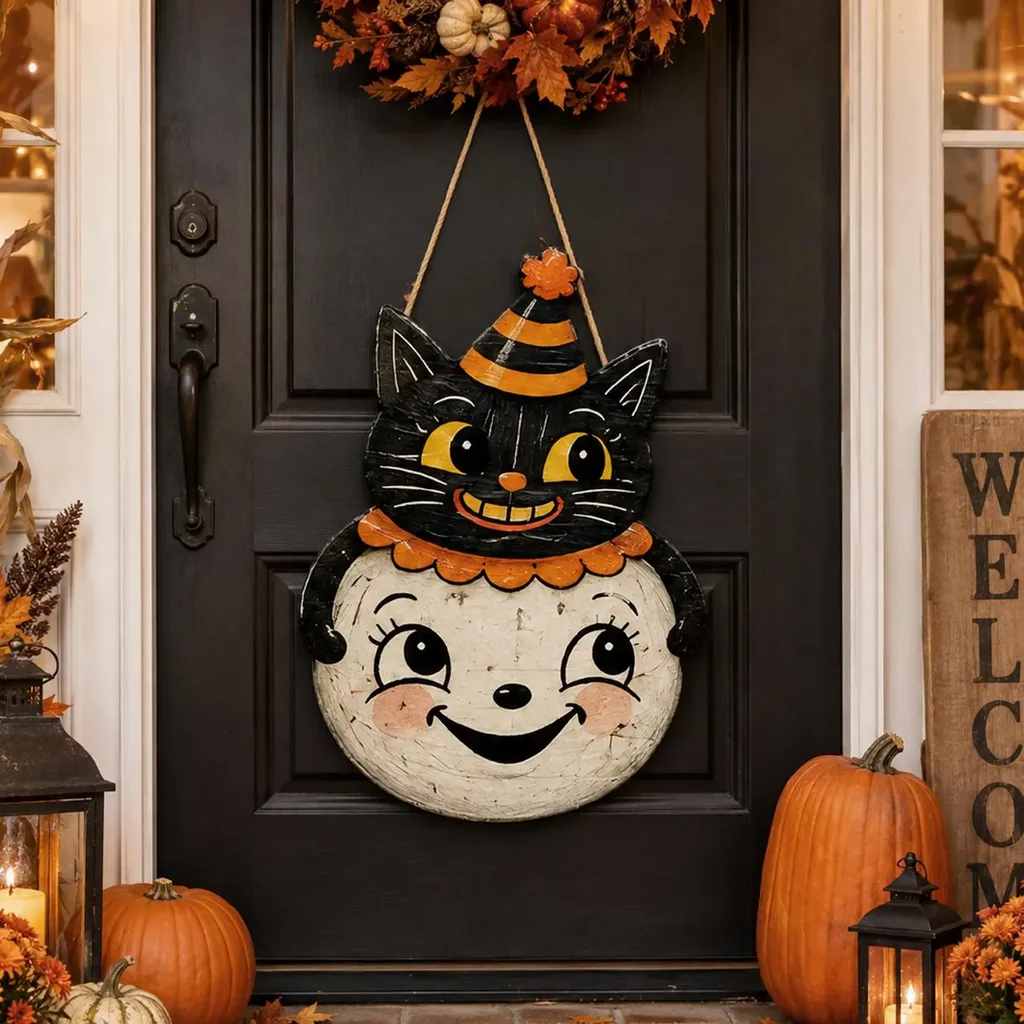
Decor trends move in circles because familiar imagery can be redrawn without losing its identity. A 1920s pumpkin may return as pastel ceramic, glossy resin, fabric, or animation and still feel nostalgic. Vintage Halloween decorations also make a current room feel collected, even if the item came home last Tuesday. That is the sweet spot: enough history to feel charming, enough new construction that the paper witch does not crumble when somebody turns on the ceiling fan.
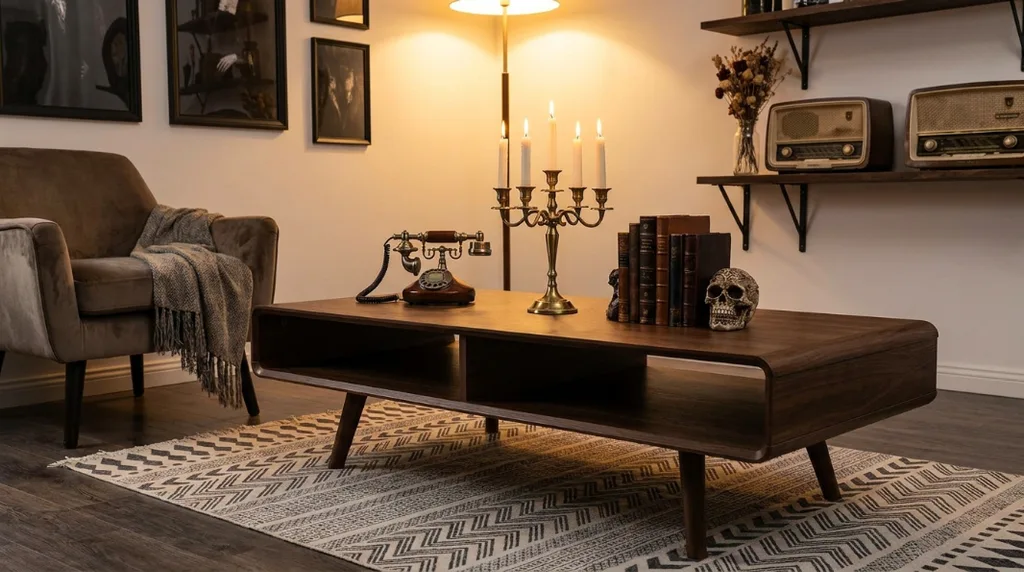
Michaels’ 2026 collections make the cycle easy to see. The company described themes inspired by vintage carnival mysticism, neighborhood Halloween parties, Victorian literature, witchy coming-of-age stories, and older eras. Its Vintage Spirits collection includes retro cats, nostalgic jack-o’-lanterns, carnival games, folk-art details, and classic orange and black.
These Halloween decorating trends show how retail keeps remixing the past. This is an observation, not permission to bring home every grinning pumpkin with good cheekbones.
Where Halloween Decor Is Headed Next
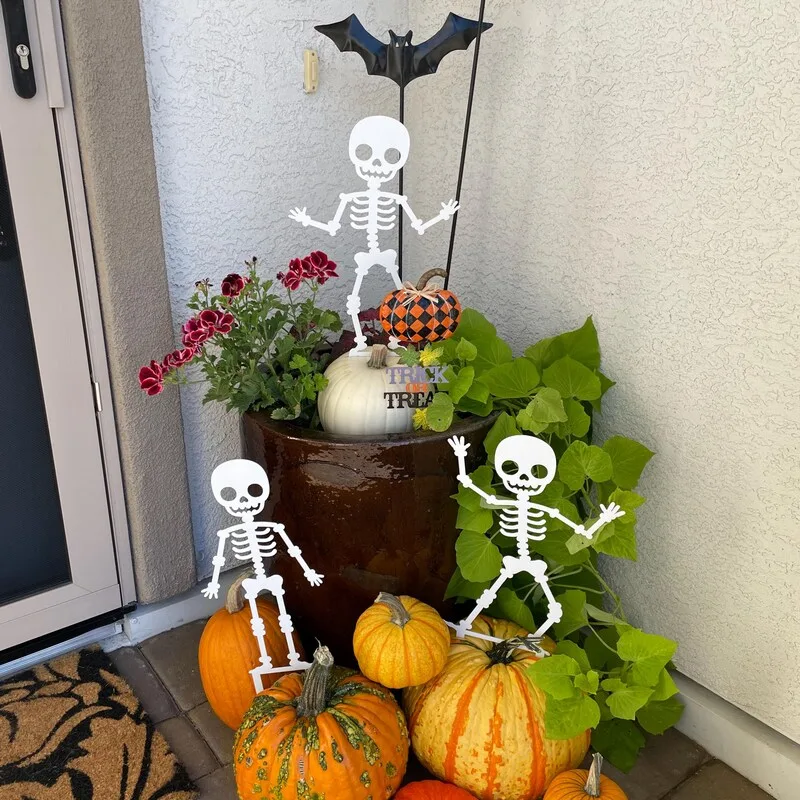
The future of Halloween decor will probably build on technology already sneaking into the house. App-controlled lights may become simpler to program, sensors may trigger sound and movement more precisely, and projections may replace some bulky scenery. The next phase in the evolution of Halloween decor may also become more personal. After seeing the same viral item in fifty videos, people often want to repaint it, style it differently, or make something nobody else on the block owns.
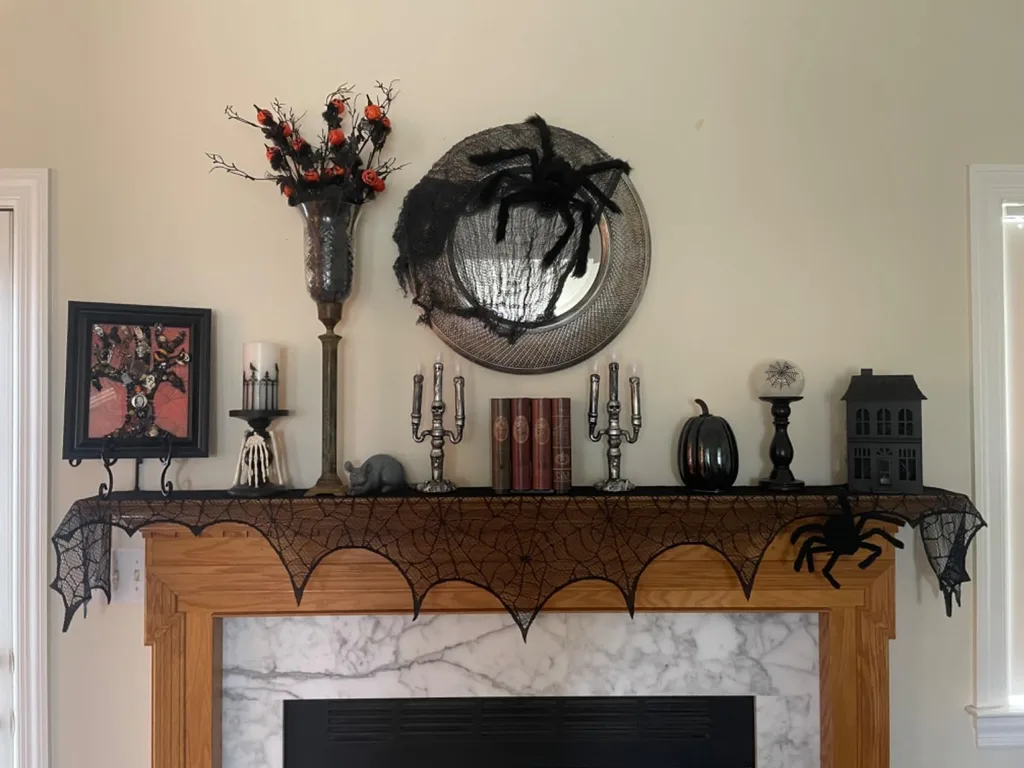
- App-controlled lighting may offer easier color changes, schedules, and coordinated effects without requiring a degree in haunted-house engineering.
- Motion sensors and other triggers may make sounds, figures, and props react more naturally to visitors.
- Digital projections may replace some large scenery and allow one blank wall to play several different roles.
- Personalized and handmade displays may balance out mass-market products and give a home its own sense of humor.
- Reusable pieces may work across Halloween, fall, Thanksgiving, and other seasons with a change of ribbon, color, or lighting.
- Vintage imagery may continue pairing with LEDs, animation, projection, and smart-home controls. Grandma’s black cat might eventually have Bluetooth.
- Weather-resistant outdoor Halloween decorations may become more useful in warm climates with heat, humidity, rain, and sudden weather shifts.
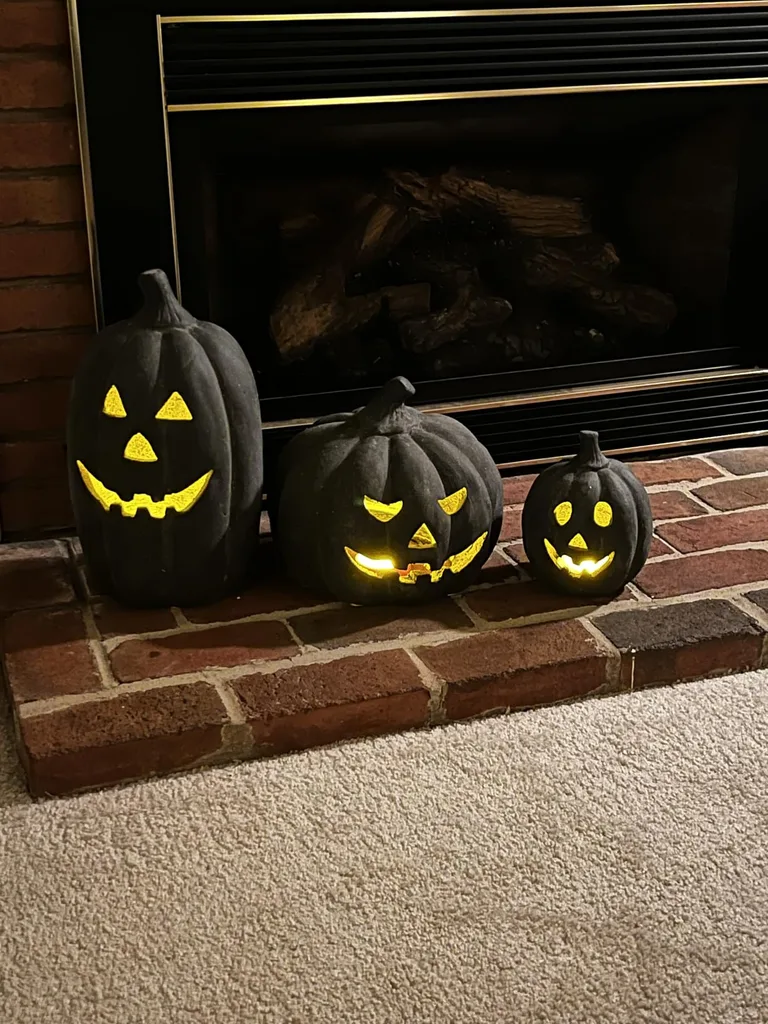
Here in Houston, that last point matters 🥵
Outdoor decorations need to handle sun, humidity, rain, heat, and weather changes that occasionally arrive like they forgot to RSVP.
Lightweight pieces need secure anchors. Electrical decorations need appropriate outdoor protection. And those giant statement pieces still need to come down without requiring a neighborhood committee meeting.
The future of Halloween decor may be clever and connected, but real households will still care about electricity use, maintenance, durability, cost, and one very important question:
Where is all of this going to sleep in November?
Halloween decorating trends have to survive real life, not only the product photo.
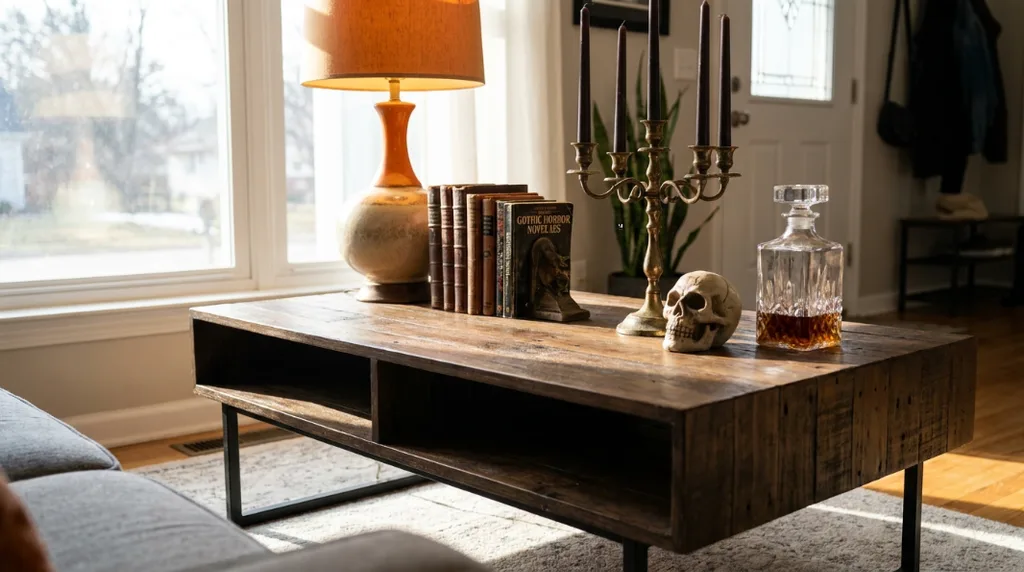
If you’re curious about which Halloween looks are worth bringing into your home next, I also have Halloween Decor Trends You’ll Love and Ones to Avoid. It’s a helpful guide for sorting through the seasonal trends that are popping up everywhere and figuring out which ones are actually worth trying.
A little trend awareness can make shopping easier, especially when you want your Halloween decor to feel current without looking like you bought every trend in one afternoon.
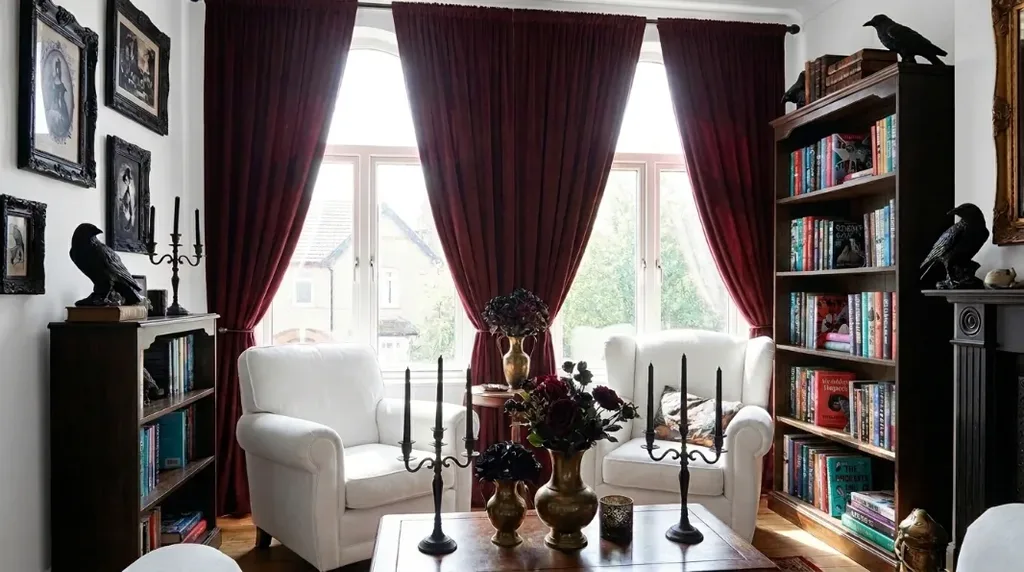
Which Halloween Decor Trends Are Worth Trying?
Knowing where Halloween decor came from makes current trends a lot easier to understand.
Vintage cats and pumpkins aren’t really “new.” Oversized yard decorations are the latest chapter in a long shift from indoor party decor toward neighborhood displays. Smart lighting is simply the newest way to create the flickering atmosphere people once made with candles.
If you’re trying to decide which current looks actually deserve space in your home, read my guide to Halloween Decor Trends You’ll Love and Ones to Avoid.
It covers current looks, practical considerations, budget-friendly choices, and trends that may create more clutter or maintenance than they deserve.
Because seeing a twelve-foot decoration online is one thing. Finding somewhere to store it is another.
Halloween Decor Then and Now: Frequently Asked Questions
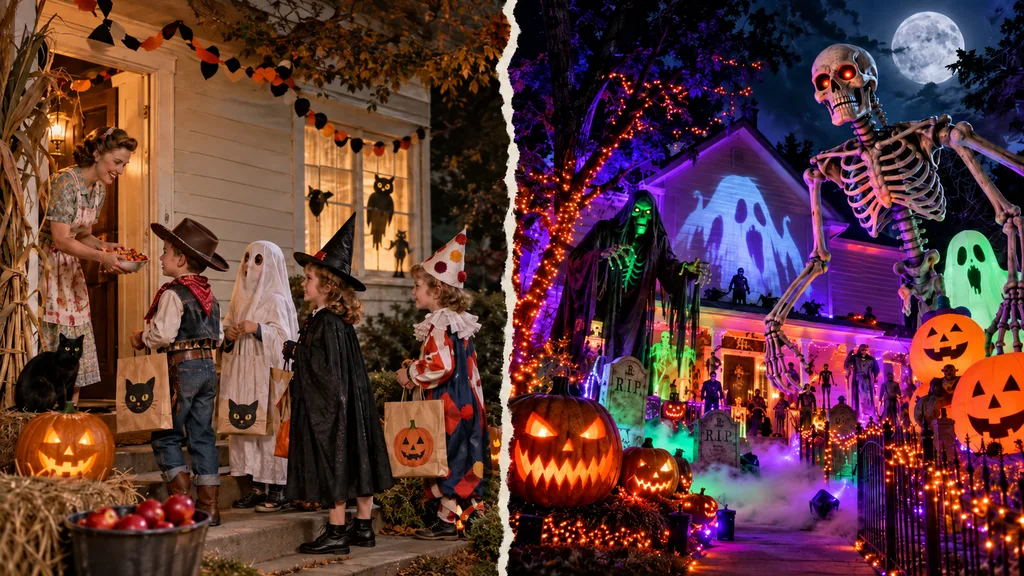
How has Halloween decor changed over time?
Halloween decor has evolved from handmade lanterns, harvest materials, candles, fabric, and paper decorations into commercially produced decor, outdoor displays, inflatables, animatronics, projections, oversized props, and smart lighting.
What were early Halloween decorations made from?
Early decorations often used materials people already had at home, including turnips, pumpkins, apples, nuts, corn, greenery, candles, paper, fabric, and household scraps.
Why are pumpkins associated with Halloween?
People in Ireland and other parts of the British Isles carved vegetables such as turnips as lanterns. Immigrants brought related traditions to North America, where pumpkins were plentiful and easier to carve, helping pumpkins become closely associated with Halloween jack-o’-lanterns.
Why is vintage Halloween decor popular again?
Vintage-inspired Halloween decor uses recognizable imagery, black cats, smiling pumpkins, witches, moons, ghosts, and classic orange-and-black color combinations, that can be redesigned for modern homes while still creating a nostalgic feeling.
What does the future of Halloween decor look like?
The future will likely mix smart lighting, projections, sensors, animation, weather-resistant materials, oversized statement pieces, reusable decorations, and more personalized or handmade elements.
Halloween Decor Continues to Reinvent Itself
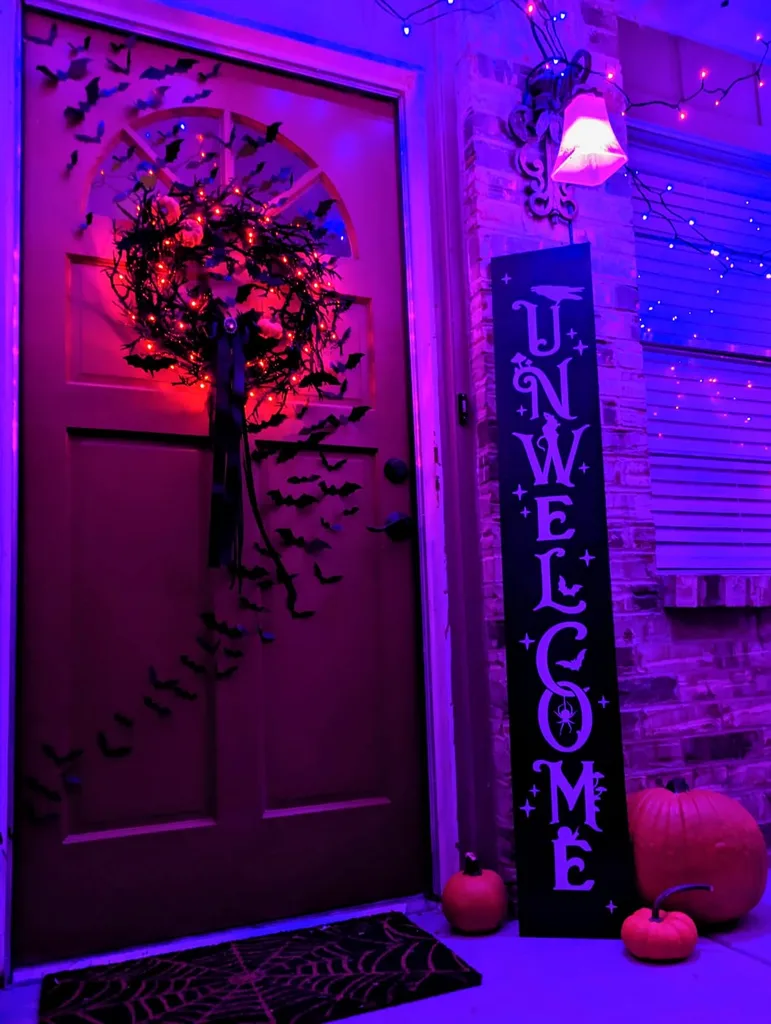
Halloween Decor Then and Now: Trends Shaping the Future proves that Halloween can change its entire outfit and still be recognizable. The clearest answer to how Halloween decor has changed runs from carved vegetables and candlelight to paper party goods, porch scenes, plastic skeletons, inflatables, viral giants, and programmable effects.
The history of Halloween decorations is full of clever trades: pumpkins replaced turnips, bulbs replaced open flames, and phone controls replaced the outdoor timer nobody remembered how to set.
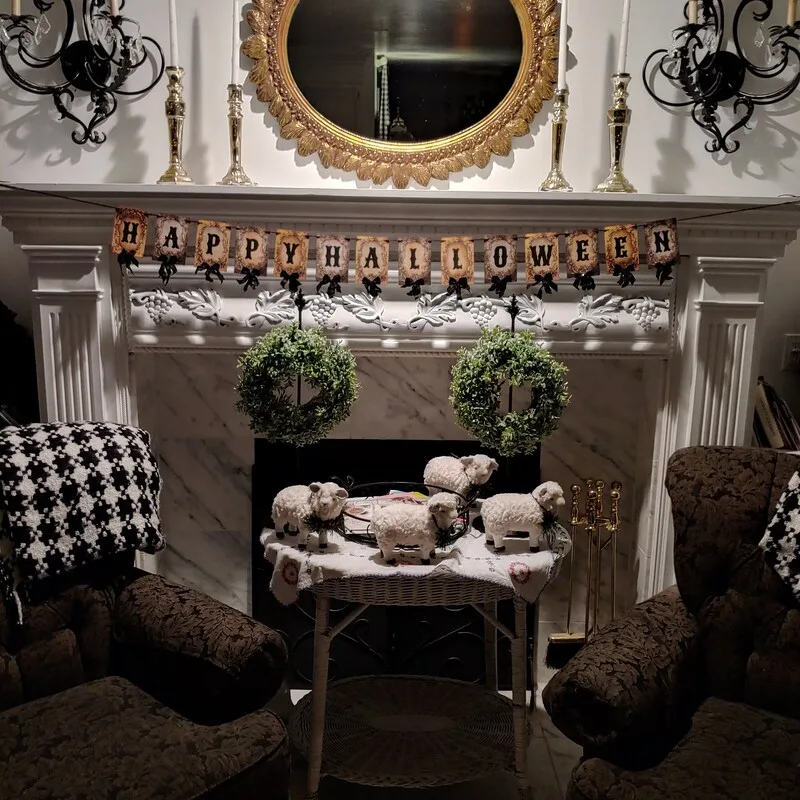
The classic symbols are not leaving. Pumpkins, witches, ghosts, moons, and black cats keep returning because they read clearly and leave plenty of room for new ideas.
Vintage Halloween decorations can sit beside smart lighting, and a handmade ghost can share the porch with a projection. That mix offers the best clue about the future of Halloween decor.
The technology will change, but somebody will still put a funny face on a pumpkin and set it by the door.
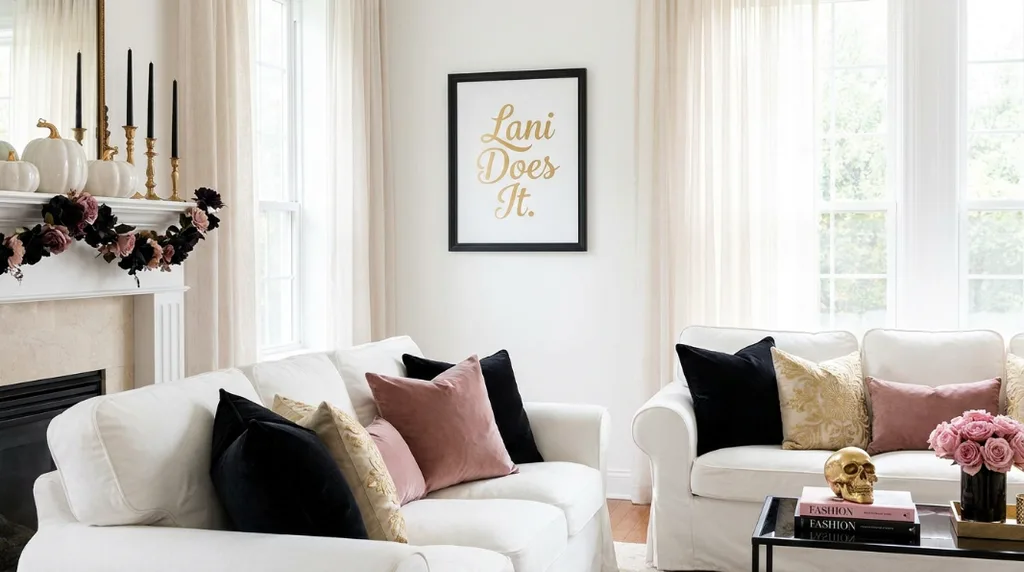
For more Halloween decorating ideas, follow me on TikTok, Instagram, and Pinterest, and subscribe to my YouTube channel. You can also shop CuratedbyLani.com for affordable Halloween decor and non-holiday finds that work with pieces you already own. Halloween Decor Then and Now: Trends Shaping the Future covers a long, wonderfully weird journey, but the reason we decorate remains simple: we want home to feel festive, personal, and just spooky enough to make October interesting. Most of all, have fun with it friends, and don’t forget to measure the ceiling before bringing Skelly inside.